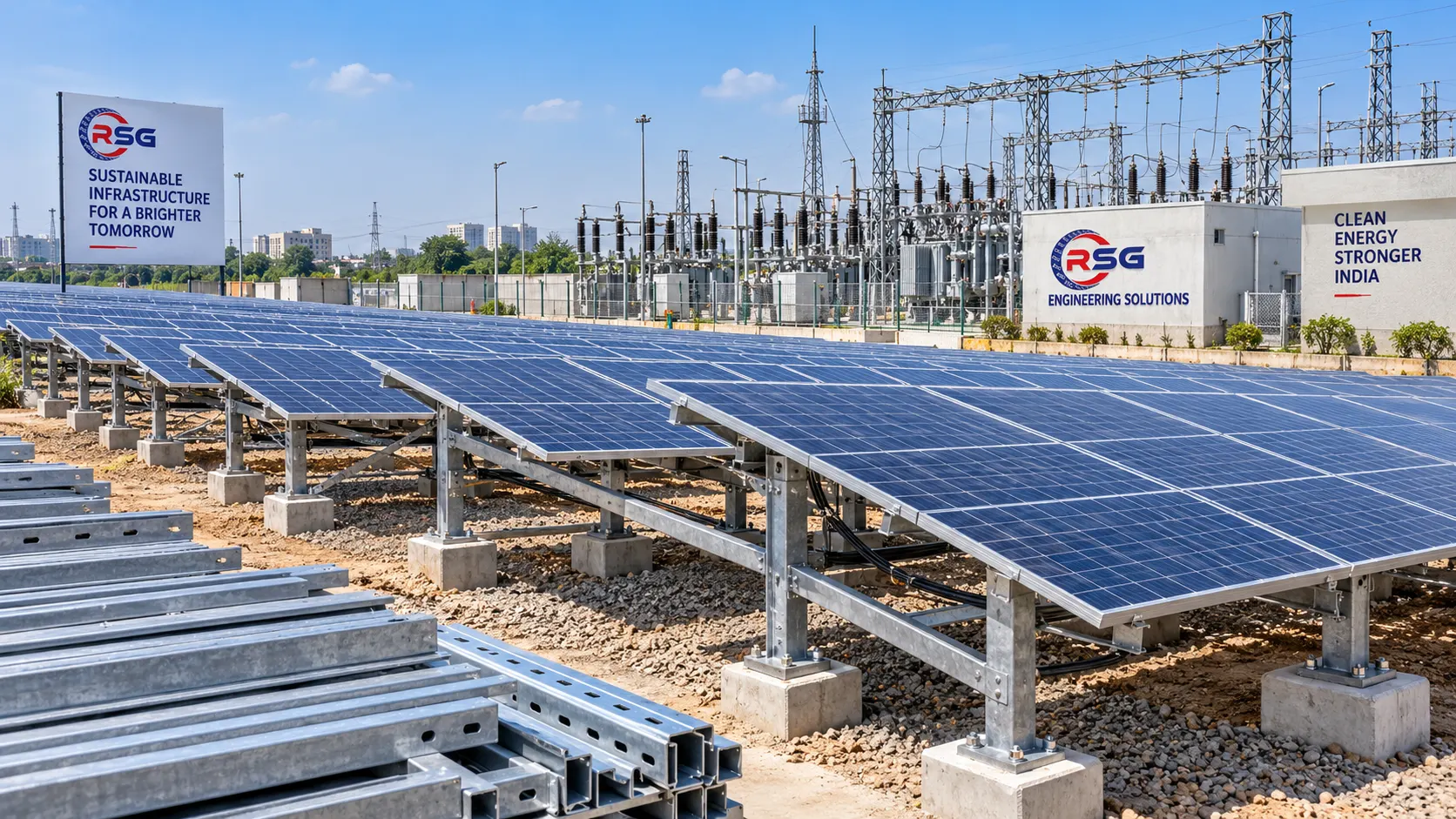
Energy infrastructure isn’t glamorous. Nobody shows up to celebrate when a switchyard gets built or when solar panels go online. But every business depends on it. Every hospital, factory, office building, and data center exists because electrical infrastructure makes it possible.
In Greater Noida, industrial development has been explosive over the past two decades. As the region has grown, so has the need for sophisticated electrical infrastructure. That means switchyards to manage power distribution, and increasingly, solar structures to capture renewable energy.
These infrastructure projects demand expertise. They demand quality. They demand manufacturers who understand structural engineering, electrical requirements, safety standards, and the specific industrial landscape of Greater Noida.
Understanding Switchyards: The Electrical Infrastructure Backbone
A switchyard might sound simple. It’s essentially a space where electrical equipment is arranged to manage power flow. But the reality is far more complex.
A switchyard is where electrical power arrives from generation sources (power plants, substations, solar installations) and gets distributed to different parts of a facility or to the grid. It contains transformers, circuit breakers, disconnect switches, grounding systems, protective relays, and control systems.
The layout of a switchyard matters enormously. Electrical safety demands proper spacing between equipment. Maintenance requires adequate access. Reliability requires redundant systems and proper protection. Environmental conditions—heat, humidity, dust, pollution—demand materials that withstand harsh conditions.
In industrial Greater Noida, with plants running 24/7 and power demands in megawatts, switchyards aren’t afterthoughts. They’re critical infrastructure that determines whether facilities operate reliably or face downtime.
This is why switchyard and solar structure manufacturers in Greater Noida are essential partners for industrial development in the region.
Types of Switchyard Structures
Switchyard design varies based on voltage, power capacity, and application. But several common types appear regularly:
Indoor Switchyards
These are housed in buildings or enclosures, protecting equipment from weather and environmental contamination. They’re common in commercial facilities, smaller industrial installations, and data centers where space efficiency matters and environmental control is possible.
Indoor switchyards are easier to maintain and more protected, but they require building infrastructure and climate control. They’re suitable for installations where space is available.
Outdoor Switchyards
These are open-air installations where equipment is exposed to weather, temperature fluctuations, and environmental stresses. They’re common in power generation facilities, transmission substations, and large industrial plants where open space is available.
Outdoor switchyards require more robust equipment and regular maintenance due to environmental exposure. Structural supports must withstand wind, earthquakes, and temperature variations.
Gas-Insulated Switchgear (GIS)
For very high voltages or space-constrained situations, gas-insulated switchgear uses sulfur hexafluoride gas to provide insulation. This allows much more compact designs. GIS installations are becoming more common in urban areas with limited space.
Hybrid Switchyards
Combining elements of indoor and outdoor designs, hybrid switchyards use structural enclosures to protect sensitive components while allowing good access and maintenance.
Solar Structures: Supporting Renewable Energy Growth
The NCR region is witnessing rapid growth in solar energy. Rooftop installations, ground-mounted arrays, solar farms, and integrated solar systems are becoming standard.
Solar structures are the steel framework that holds solar panels at the proper angle for maximum energy generation. They seem simple but involve considerable engineering.
Rooftop Solar Structures
These are installed on building roofs. Design considerations include building load capacity, wind resistance, accessibility for maintenance, and aesthetic integration. Rooftop structures need to be lightweight but incredibly strong, and they need to properly distribute loads across building structure.
Ground-Mounted Solar Structures
These are the most common for utility-scale solar installations. Arrays of panels are mounted on structural frames that allow proper spacing for air circulation and cleaning. Ground-mounted structures must handle wind loads, allow for equipment access, provide proper grounding, and withstand years of environmental exposure.
Solar Canopy Structures
Used in parking areas and open spaces, these provide both shade and power generation. They must handle vehicle loads or accumulating snow and ice in some regions.
Bifacial Solar Mounting Systems
Advanced systems that allow light to reach the back of panels for increased efficiency. These require special structural engineering to maintain proper spacing and allow ground-reflected light to reach the back surface.
Each type of solar structure demands different engineering and different materials. Manufacturers need expertise across all these variations.
Structural Materials: The Foundation of Everything
The materials used in switchyard and solar structures determine reliability and longevity:
Mild Steel (MS)
Most switchyard and solar structures use mild steel angles, channels, beams, and plates. Mild steel is affordable, available, formable, and weldable. The challenge is corrosion resistance.
In Greater Noida’s industrial environment, with humidity, temperature fluctuations, and sometimes chemical exposure, mild steel requires protection through painting, galvanizing, or powder coating.
Galvanized Steel
When mild steel is galvanized (coated with zinc), it becomes much more corrosion-resistant. Hot dip galvanizing, where steel is dipped into molten zinc, creates a protective coating that lasts 15-20+ years with minimal maintenance.
For outdoor installations where environmental exposure is significant, galvanized steel is standard. The cost premium is justified by dramatically improved lifespan.
Aluminum
Used in some applications where weight is critical or corrosion resistance is paramount. Aluminum structures are lighter and naturally corrosion-resistant, but more expensive than steel. They’re common in rooftop installations where building load capacity is limited.
Stainless Steel
Used in specialized applications where extreme corrosion resistance is needed or where facilities handle corrosive chemicals. Stainless steel is expensive but extremely durable.
Quality manufacturers understand these materials and specify them appropriately based on application requirements and environmental conditions in Greater Noida.
Design and Engineering: Where Theory Meets Reality
Switchyard and solar structure manufacturers don’t just bend metal. They engineer solutions.
Load Analysis
Structures must handle multiple types of loads: dead load (weight of structure and equipment), live load (people, maintenance equipment), wind load (critical for solar arrays and outdoor switchyards), snow load (less critical in Greater Noida but still considered), and seismic load (important for earthquake protection).
Engineers calculate all these loads and design structures that safely withstand them with appropriate safety factors.
Foundation Design
Structures must be anchored to foundations. Foundation design depends on soil conditions, total load, and environmental factors. Inadequate foundations cause failures. Oversized foundations waste money. Proper design gets it right.
Connection Design
How different components connect to each other matters enormously. Bolted connections, welded joints, and foundation anchors must all be properly designed and executed. Poor connections create weak points that fail under load.
Environmental Design
Structures operating in Greater Noida face specific environmental challenges. Humidity, temperature variations, dust, and sometimes chemical exposure demand materials and design that withstand these conditions.
Access and Maintenance Design
Structures must allow workers to safely access all parts for maintenance, inspection, and repair. Poor design creates maintenance nightmares.
Quality manufacturers think through all these engineering factors. They don’t just say “yes, we can build that.” They design solutions that work.
Manufacturing and Fabrication: Quality in Execution
Good design means nothing without quality fabrication:
Material Selection
It starts with the right materials. Quality manufacturers source steel from reputable suppliers and verify material certifications. They don’t use questionable material or salvaged components.
Cutting and Shaping
Precision equipment cuts components to exact dimensions. Tight tolerances ensure everything fits together properly.
Welding Quality
This is critical. Improper welding creates weak points. Quality manufacturers employ certified welders and follow proper welding procedures. They may conduct ultrasonic testing or X-ray inspection of critical welds.
Drilling and Fastening
Bolt holes must be drilled to exact location and size. Fasteners must be properly torqued.
Surface Preparation
Before painting or galvanizing, surfaces must be cleaned. Proper surface preparation determines how well protective coatings adhere and perform.
Coating Application
Whether painting or galvanizing, protective coatings must be applied properly. Thickness, coverage, and curing all matter.
Testing and Inspection
Components are inspected at multiple stages. Dimensional inspection verifies size and fit. Non-destructive testing checks for internal flaws. Load testing can verify structural capacity.
Quality manufacturers invest in these processes because they know that failures in the field create huge problems.
Applications: Where These Structures Power Greater Noida
Power Generation Facilities
Conventional power plants and renewable energy installations need sophisticated switchyard infrastructure to manage power generation and distribution. Solar farms throughout the NCR region depend on properly engineered solar structures.
Substations and Grid Infrastructure
Electrical substations that step voltage up or down for transmission and distribution depend on switchyard infrastructure. The regional power grid depends on these facilities.
Manufacturing Facilities
Industrial plants with significant electrical demands need switchyards to manage power distribution. Many modern facilities are adding rooftop solar for on-site power generation.
Data Centers and IT Infrastructure
These facilities have massive electrical demands with critical reliability requirements. Proper switchyard design and redundancy are essential.
Hospitals and Healthcare Facilities
Medical facilities need reliable power and increasingly add backup generation. Switchyards must be designed for absolute reliability.
Commercial Complexes and Office Buildings
Modern commercial buildings incorporate rooftop solar and energy management systems. Switchyard infrastructure and solar structures are standard components.
Educational Institutions
Universities and colleges are increasingly adding renewable energy. Proper structural engineering ensures these installations perform reliably.
Each application demands something slightly different, but all demand quality manufacturing and proper engineering.
Standards and Safety: Why They Can’t Be Ignored
Switchyard and solar structures aren’t built to manufacturer preferences. They’re built to standards:
IS 2062: Indian Standard for mild steel plates, sections, and bars.
IS 2629: Indian Standard for hot dip galvanized coatings.
IS 4759: Indian Standard for hot dip galvanized structural steel sections.
IS 1886: Indian Standard for design, fabrication, erection, and testing of structural steel in buildings.
IEC Standards: International standards for high-voltage electrical equipment and installations.
IEEE Standards: For power system equipment and practices.
Local Building Codes: Municipal requirements for installations in Greater Noida.
Professional engineers designing these installations refer to these standards. Manufacturers producing to these standards ensure their products meet actual technical requirements.
More importantly, structures built to standards have been tested through experience. Engineers know what works and what doesn’t.
Installation and Commissioning: Getting It Right in the Field
Manufacturing quality components is necessary but not sufficient. Installation matters equally.
Site Preparation: Foundations must be properly prepared and leveled.
Accurate Positioning: Components must be positioned exactly as designed. Even small deviations create problems.
Proper Connections: Bolts must be torqued to specification. Welds must be executed properly if field welding is required.
Alignment Verification: After installation, dimensional verification confirms that components are properly aligned and properly connected.
Testing: Before equipment is energized, structural integrity is verified through load testing or physical inspection.
Documentation: Proper records are maintained showing what was installed, when, by whom, and test results.
Quality manufacturers provide installation guidance or work with certified installation partners to ensure work is done properly.
Long-Term Maintenance: Ensuring Longevity
Switchyard and solar structures must operate reliably for 20+ years. This requires proper maintenance:
Regular Inspection: Visual inspection identifies corrosion, loose connections, structural damage, or wear.
Preventive Maintenance: Addressing small problems before they become big problems. Repainting, bolt tightening, and coating touch-up prevent failures.
Periodic Testing: Structural integrity testing verifies that systems remain safe and reliable.
Environmental Monitoring: In harsh environments, more frequent inspection is needed.
Manufacturers who understand long-term maintenance requirements design and fabricate structures that remain reliable through decades of operation.
Why Regional Manufacturers Matter
You could order switchyard and solar structures from anywhere. But real advantages come from working with manufacturers in Greater Noida:
Regional Expertise: They understand local soil conditions, climate, environmental factors, and regulatory requirements.
Proven Track Record: Years of experience in the region means their designs and construction methods have been tested in actual conditions.
Installation Partner Network: They have relationships with experienced installation contractors and engineers who understand local requirements.
Supply Reliability: Local manufacturers can provide materials quickly and maintain inventory of common components.
Technical Support: They can advise on system design, optimal component selections, and installation planning.
Accountability: A manufacturer based in the region has reputation at stake and is more motivated to ensure quality.
Choosing the Right Manufacturer
When evaluating switchyard and solar structure manufacturers in Greater Noida:
Do they have design engineering capability? Can they review your project requirements and design appropriate solutions?
What’s their fabrication experience? How many similar projects have they completed? Can they provide references?
Do they meet relevant standards? Verify they produce materials and work to IS standards and relevant codes.
What quality controls do they maintain? Do they have testing equipment and inspection processes?
Do they have ISO 9001 certification? This indicates documented quality processes.
Can they provide detailed documentation? Drawings, material certificates, test results, and construction records.
What’s their warranty and after-sale support? Good manufacturers stand behind their work.
Do they understand your application? Do they ask intelligent questions about your specific needs?
When you find a manufacturer checking these boxes, you’ve found a partner who can help you build infrastructure that works reliably for decades.
The Bottom Line
Switchyard and solar structures might not be as obvious as production equipment, but they’re equally critical to facility operations and success.
As Greater Noida continues industrial growth and the region embraces renewable energy, properly engineered and quality-manufactured switchyard and solar structures become increasingly important. They determine whether power systems operate reliably, whether renewable installations generate expected output, and whether facilities operate safely.
The decision to work with an established switchyard and solar structure manufacturer in Greater Noida isn’t just about getting components built. It’s about partnering with someone who understands structural engineering, electrical requirements, the local environment, regulatory standards, and what it takes to build infrastructure that lasts.
Quality structures work silently in the background for decades. Poor structures create headaches from day one.
FAQ Section
Q: What’s the difference between indoor and outdoor switchyards?
A: Indoor switchyards are housed in buildings, providing protection from weather but requiring building infrastructure. Outdoor switchyards are open-air installations with exposed equipment but requiring less building space. Choice depends on available space, environmental conditions, and maintenance requirements.
Q: How long do solar structures last?
A: Properly designed and built solar structures last 25-30+ years, matching solar panel lifespan. Regular maintenance and protective coatings (paint or galvanizing) extend lifespan. Harsh environmental conditions may require more frequent maintenance.
Q: What soil conditions affect switchyard foundation design?
A: Soil bearing capacity, compressibility, and seasonal water table depth all affect foundation design. Hard clay or rocky soil supports deep foundations differently than sandy or silty soil. Professional soil investigation is essential before design.
Q: Can solar structures be expanded or modified?
A: Some designs allow expansion, but modification depends on original design. Proper engineering at the start allows for future expansion. Improper design locks in current capacity. Consult with engineers before assuming expansion is possible.
Q: What maintenance do switchyard structures need?
A: Periodic inspection for corrosion, loose connections, and structural damage. Repainting or touch-up coating as protective coatings wear. Bolt tightening if vibration causes loosening. More frequent maintenance in harsh environments.
Q: Are recycled or salvaged materials used in solar structures?
A: Reputable manufacturers use new, certified materials. Recycled steel can be used if it meets standards and is properly certified, but quality manufacturers specify and verify material sources to ensure reliability.
Q: How are solar structures designed for high winds?
A: Structural engineers calculate wind load based on location and height. Structures are designed with safety factors to withstand extreme winds expected in the region. Foundation anchoring is critical for wind resistance.
Q: What’s the difference between galvanized and painted steel structures?
A: Galvanizing provides long-term protection (15-20+ years) with minimal maintenance. Painting provides lower-cost protection but requires regular repainting (every 5-10 years). Environmental exposure determines which is more practical.
Ready to Build Your Infrastructure?
Whether you’re planning a switchyard for power management or solar structures for renewable energy, proper engineering and quality manufacturing are essential.
Our manufacturing infrastructure in Greater Noida is equipped to handle switchyard and solar structure fabrication at scale. We work with design engineers to turn concepts into reality.
Want to understand our quality standards and testing capabilities? Visit our quality and certifications page to see how we ensure reliability.
Ready to discuss your project requirements? Contact our team at 8810526396. We serve Greater Noida and the surrounding industrial regions. We can help you design, fabricate, and commission switchyard and solar structures that operate reliably for decades.
Proper infrastructure doesn’t just happen. It’s engineered, manufactured, and installed by people who know what they’re doing. Let’s build it right.