
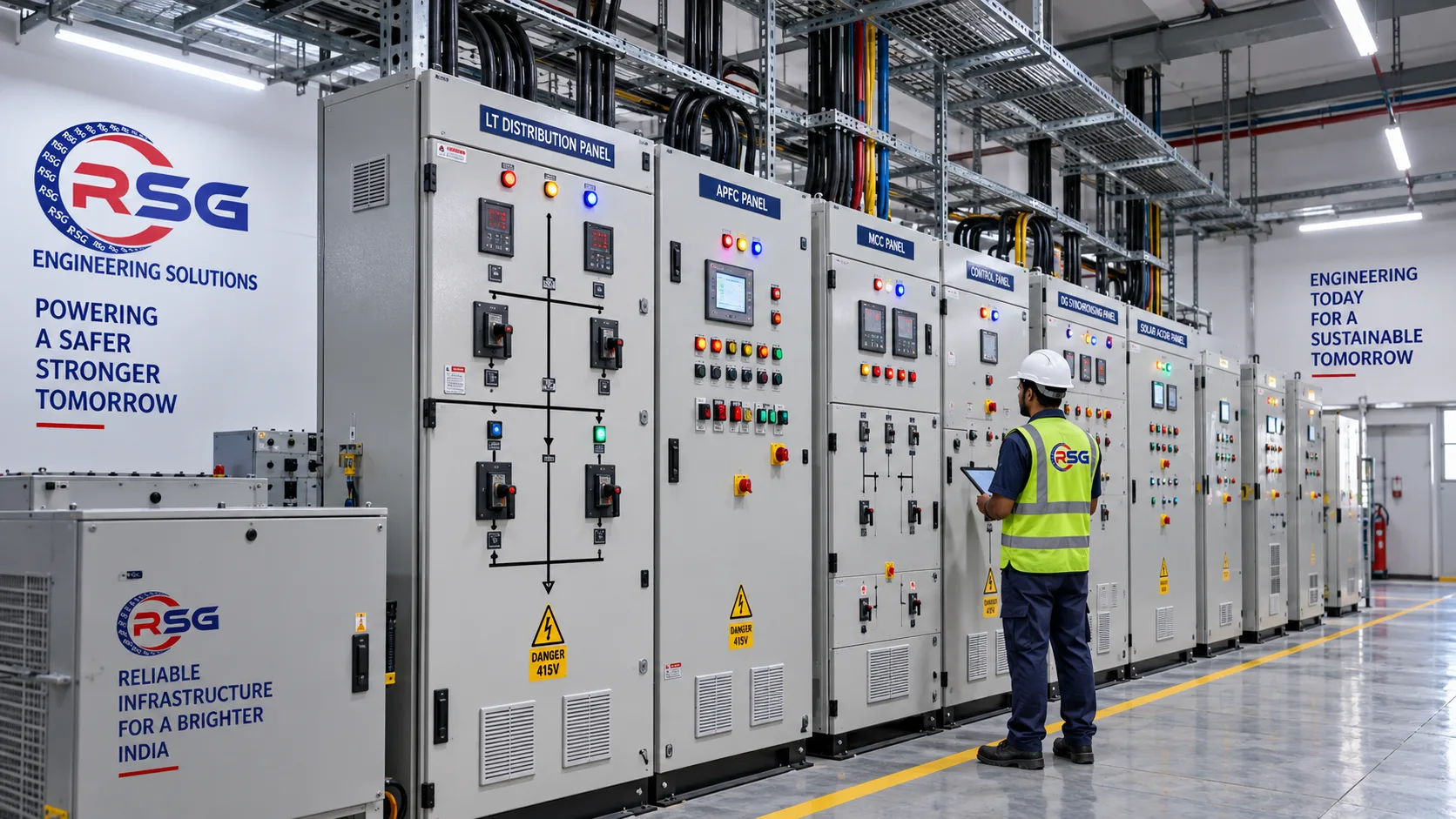
Every machine in a factory has a brain. That brain is the electrical panel. It processes information, makes decisions, controls motion, manages power, and keeps everything running according to plan.
When that brain doesn’t work properly, the machine stops. The production line stops. Revenue stops. Problems cascade quickly.
This is why the quality of electrical panels matters so much. They’re not just metal boxes with components inside. They’re the nervous system of industrial operations.
In Greater Noida, where manufacturing is serious business and industrial facilities operate around the clock, finding reliable electrical panel manufacturers isn’t optional. It’s essential.
Understanding Electrical Panels: More Than Just Metal and Components
An electrical panel might look like a cabinet mounted on a wall. Inside is where the complexity lives.
A control panel contains circuit breakers that protect circuits from overload or short circuits. It contains relays that control switching of circuits. It contains terminal blocks where incoming and outgoing connections are made. It contains bus bars that distribute power. It contains fuses, contactors, timers, indicators, and dozens of other components, all working together to manage electrical systems.
The panel design determines how reliably these components work together. Poor design creates failures. Good design creates reliability.
Think of an electrical panel like a traffic control center. You’ve got incoming traffic (power supply), you’ve got different directions traffic needs to go (different circuits), you’ve got safety systems (circuit breakers and fuses), and you’ve got someone managing everything (relays and control systems). If the traffic control center is poorly designed, chaos results. If it’s well-designed, traffic flows smoothly and safely.
Different facilities need different panel configurations. A textile mill has different requirements than a pharmaceutical facility. A printing press has different requirements than a packaging line. A commercial building has different requirements than a data center.
This is why electrical panel manufacturers in Greater Noida don’t just mass-produce identical units. They design and build custom solutions for different applications.
Types of Electrical Panels: Understanding Your Options
Not all electrical panels are the same. Different applications need different configurations:
LT Distribution Panels
These handle Low Tension (LT) power distribution. They receive power from the main supply or transformer and distribute it to different parts of a facility. LT distribution panels typically operate at 415V AC or lower.
Distribution panels are the heart of facility power management. They need to be designed for the specific load profile of the facility, with enough capacity for current needs and future expansion, with proper protection for each circuit, and with clear organization for maintenance.
Control Panels
These are the brains of machines and processes. They contain programmable controllers, relays, and logic circuits that control machine operations. Control panels might manage motor speeds, coordinate production sequences, monitor sensor inputs, or manage safety interlocks.
Control panels are more complex than distribution panels because they incorporate logic and decision-making. They need careful design to ensure proper functionality and reliability.
Power Factor Correction Panels
These improve efficiency by correcting power factor. Inductive loads like motors draw reactive power that doesn’t do useful work. Power factor correction capacitors reduce this reactive power, reducing electricity bills and improving system efficiency.
Modern facilities increasingly use power factor correction. It’s not optional in many commercial and industrial applications.
Automatic Transfer Switch (ATS) Panels
When primary power fails, these panels automatically switch to backup power (generators or UPS systems). The switching must be fast and reliable to maintain continuous operation.
Data centers, hospitals, and critical infrastructure depend on ATS panels. They’re common in Greater Noida’s industrial facilities where downtime is expensive.
Soft Starter and VFD Panels
These reduce inrush current when motors start, protecting the motor and power supply. Variable Frequency Drives (VFDs) allow motor speed control, improving efficiency and reducing energy consumption.
Modern manufacturing increasingly uses soft starters and VFDs. They’re standard in quality control panel fabrication.
PLC and SCADA Panels
Programmable Logic Controllers (PLCs) and Supervisory Control and Data Acquisition (SCADA) systems manage complex industrial processes. Control panels incorporating these systems are highly specialized and require sophisticated design and programming.
These panels are increasingly common in Greater Noida’s advanced manufacturing facilities.
Component Selection: Quality in Every Element
A panel’s reliability depends as much on the quality of individual components as on the design:
Circuit Breakers
These protect circuits from overload and short circuits. Quality circuit breakers trip instantly when faults occur. Poor-quality breakers fail to trip or trip unnecessarily, creating problems.
Reputable electrical panel manufacturers use circuit breakers from established manufacturers like ABB, Schneider Electric, or Siemens.
Relays and Contactors
These switch circuits on and off based on control signals. They must operate reliably thousands or millions of times. Poor relays create intermittent failures that are nightmares to troubleshoot.
Quality manufacturers specify relays rated for their specific application and number of switching cycles.
Terminal Blocks
Every wire connection in a panel must be secure and properly made. Terminal blocks provide connection points. Poor terminal blocks create loose connections that overheat and fail.
Quality manufacturers use proper terminal blocks with appropriate current ratings and connection types.
Bus Bars
These copper or aluminum bars distribute power throughout the panel. They must have sufficient capacity for maximum current without overheating. Improper bus bar sizing creates hot spots and failures.
Professional panel designers calculate bus bar sizing based on current and acceptable temperature rise.
Wiring
Every wire must be properly rated for the current it carries and the voltage in the circuit. Wire sizing is governed by standards. Undersized wires overheat and fail. Oversized wires waste material and money.
Quality panel manufacturers follow wiring standards meticulously.
Mechanical Components
Hinges, locks, handles, and mounting hardware might seem trivial but affect panel durability. Quality panels use durable mechanical components that function reliably for years.
Panel Design Principles: Engineering for Reliability
Good panel design follows principles developed through decades of industrial experience:
Heat Management
Components generate heat. Improper layout causes heat accumulation in hot spots, reducing component lifespan. Proper design ensures air circulation and thermal management. This might include ventilation fans, heatsinks, or strategic component spacing.
Accessibility
Maintenance technicians need to access components without removing and rewiring everything. Good design arranges components logically, labels everything clearly, and allows access without causing cascading problems.
Safety
Live parts must be protected. Accidentally touching a live terminal can cause electrocution. Proper panel design includes interlocks that cut power when the panel door opens, proper guarding, and clear labeling of hazards.
Scalability
Facilities evolve. New machines are added. Production increases. Good panel design includes spare capacity for future expansion. Adding a new circuit shouldn’t require rebuilding the entire panel.
Testing
Before panels leave the factory, they should be tested. Load testing verifies that all circuits function properly. Insulation testing verifies electrical safety. Thermal testing verifies heat management.
Quality manufacturers test every panel before it ships.
Manufacturing Process: Quality in Fabrication
Panel manufacturing isn’t just assembly. It’s precision work requiring skilled technicians and proper processes:
Design and Engineering
It starts with understanding requirements. What voltage? What current? What functions? What environment? What safety requirements? Professional panel manufacturers conduct thorough requirements analysis before design begins.
Component Procurement
Quality manufacturers source components from reputable suppliers, verify component specifications, and maintain inventory of quality components. They don’t use questionable or counterfeit components.
Sheet Metal Fabrication
The panel enclosure is fabricated from sheet steel. This includes cutting, bending, and welding. Tolerances must be maintained so doors align properly and components fit correctly.
Internal Layout and Assembly
Components are positioned inside the panel according to design. Bus bars are installed. Terminal blocks are mounted. Relays and contactors are positioned.
Wiring and Cabling
Every connection is made according to design. Wires are cut to proper length, stripped, and connected to terminal blocks. Color coding ensures proper identification. Every connection is visually inspected.
Testing and Verification
Completed panels undergo rigorous testing. Continuity testing verifies that all connections are made properly. Insulation testing verifies electrical safety. Load testing verifies that circuits function under load.
Documentation
Professional manufacturers provide documentation showing the panel design, components used, testing results, and operating instructions. This is essential for maintenance and troubleshooting.
Quality Control Inspection
Before shipping, trained inspectors verify that the panel meets specifications. They check component positioning, wiring quality, labeling, and mechanical condition.
Applications: Where Control Panels Power Greater Noida
Manufacturing Facilities
Textile mills, automotive suppliers, electronics manufacturers, food processing plants, and industrial equipment makers depend on control panels. Each production line has multiple control panels managing different processes.
Packaging and Bottling Lines
High-speed packaging requires precise control. Control panels manage motor speeds, timing, material flow, and quality control systems.
Pharmaceutical Manufacturing
Strict requirements for accuracy, repeatability, and documentation demand sophisticated control panels. Regulatory compliance requires detailed testing and validation.
Power Generation and Distribution
Distribution panels manage power flow from generators to consumers. These operate 24/7 and must be incredibly reliable.
Data Centers
These facilities operate multiple redundant systems. Control panels manage power distribution, cooling systems, and backup power switching.
Hospitals and Medical Facilities
Life-critical systems depend on electrical panels. Control systems must be reliable, well-tested, and documented.
Water Treatment and Utilities
Municipal systems serving Greater Noida depend on control panels for water treatment, distribution, and quality control.
Commercial Complexes and Office Buildings
Building management systems control lighting, HVAC, power distribution, and backup systems. These panels are standard in modern buildings.
Each application demands different expertise, but all demand quality manufacturing and proper engineering.
Standards and Testing: Why Compliance Matters
Electrical panels aren’t built to manufacturer preference. They’re built to standards:
IS 2445: Indian Standard for Low Voltage Switchgear and Control Gear Assemblies.
IS 8623: Indian Standard for Medium Voltage Switchgear and Control Gear Assemblies.
IEC 61439: International standard for Low Voltage Switchgear and Control Gear Assemblies.
IEC 61346: Principles for identification of equipment in electrical installations.
IS 1866: Indian Standard for General Requirements for Low Voltage Switchgear and Control Gear.
IEC 61000: International standards for electromagnetic compatibility.
Professional engineers designing electrical systems specify components and panel configurations to meet these standards. Reputable manufacturers build to these standards.
Testing performed during manufacturing includes:
Type Testing: Performed on representative samples to verify that panel designs meet standards.
Routine Testing: Performed on every panel to verify proper assembly and function.
Site Testing: Performed after installation to verify proper function in the actual application.
Quality manufacturers provide test certificates documenting that panels have passed these tests.
Installation and Commissioning: Getting It Right in the Field
Manufacturing quality panels is necessary but not sufficient. Proper installation is equally important.
Site Preparation: The location where the panel will be installed must be prepared. Proper ventilation, adequate space for access, and proper mounting surfaces are essential.
Proper Installation: The panel must be mounted securely and level. Incoming power and outgoing circuits must be connected according to design. Earthing must be properly established.
Initial Testing: Before operating, the panel must be tested to verify proper function in its installed location.
Operator Training: Users need to understand how to operate the panel safely and effectively.
Documentation: As-installed drawings, test results, and operating procedures must be provided.
Quality panel manufacturers work with installation partners to ensure proper installation, or provide detailed installation instructions and guidance.
Maintenance and Support: Long-Term Reliability
Electrical panels must operate reliably for 10, 20, or more years. This requires proper maintenance:
Regular Inspection: Visual inspection identifies loose connections, corrosion, or component failures.
Preventive Maintenance: Scheduled cleaning, bolt tightening, and component replacement prevent failures.
Performance Monitoring: Tracking panel performance over time identifies degradation before catastrophic failure.
Emergency Support: When problems occur, quick response and expert diagnosis minimize downtime.
Quality panel manufacturers maintain ongoing relationships with customers and provide support as needed.
Choosing the Right Electrical Panel Manufacturer
When evaluating electrical panel manufacturers in Greater Noida:
Do they have design engineering capability? Can they review your requirements and design appropriate panels?
What’s their fabrication experience? How many similar panels have they built? Can they provide references?
Do they meet relevant standards? Verify they build to IS and IEC standards.
What testing do they perform? Do they test every panel before shipping?
Do they have ISO 9001 certification? This indicates documented quality processes.
Can they provide documentation? Design drawings, component lists, test results, and operating procedures?
What’s their warranty and support? Do they stand behind their work and provide ongoing support?
Do they understand your application? Do they ask intelligent questions about your specific needs?
Can they handle customization? Can they build panels specific to your application, or only standard units?
When you find a manufacturer checking these boxes, you’ve found a partner who can help you implement control solutions that work reliably.
The Bottom Line
Electrical panels might not be as visible as production equipment, but they’re every bit as critical to facility success.
In Greater Noida’s competitive industrial landscape, reliable electrical panels aren’t luxuries. They’re essentials for operational success. They determine whether production runs smoothly, whether processes are controllable, whether safety systems function properly, and whether facilities operate efficiently.
The decision to work with a professional electrical panel manufacturer in Greater Noida isn’t just about getting panels built. It’s about partnering with someone who understands control system design, electrical standards, industrial applications, quality manufacturing, and what it takes to build reliable systems that work.
Good panels work reliably for years. Poor panels create frustration and downtime from day one.
FAQ Section
Q: What’s the difference between LT and MV distribution panels?
A: LT (Low Tension) panels typically operate at 415V AC or lower. MV (Medium Voltage) panels operate at higher voltages, typically 6.6kV to 33kV. MV panels require more robust design and safety measures due to higher voltages and currents.
Q: Can existing panels be modified or expanded?
A: Depends on original design. Panels with spare capacity can be expanded. Panels designed for no growth are difficult to modify. Proper design at the start anticipates future needs.
Q: How often should electrical panels be tested and maintained?
A: Recommendations vary by application and standards. Annual inspection is common for industrial panels. Critical applications like hospitals or data centers may require more frequent testing. Consult your engineer or relevant standards.
Q: What’s the difference between soft starters and VFDs?
A: Soft starters reduce inrush current when motors start, protecting equipment. VFDs (Variable Frequency Drives) allow continuous motor speed control, improving efficiency. Both reduce stress on motors and power systems.
Q: How long should electrical panels last?
A: Properly designed and maintained panels typically last 15-20+ years. Harsh environments or poor maintenance reduce lifespan. Regular inspection and preventive maintenance extend operational life.
Q: Can panels handle future expansion of electrical loads?
A: Yes, if designed with future growth in mind. Proper engineering includes spare capacity. Panels designed for exact current needs cannot be expanded without replacement.
Q: What safety features should electrical panels include?
A: Essential features include circuit breakers for overcurrent protection, proper earthing and bonding, interlocks to cut power when doors open, clear labeling and warning signs, and proper guarding of live parts.
Q: How do I know if a panel manufacturer meets quality standards?
A: Ask for ISO 9001 certification, compliance with IS and IEC standards, test certificates for completed panels, references from similar projects, and warranty information. Quality manufacturers are transparent about their processes and standards.
Ready to Control Your Operations?
Electrical panels are critical infrastructure. They need to be designed properly, manufactured to standards, tested thoroughly, and supported by manufacturers who care about your success.
Our manufacturing infrastructure in Greater Noida is equipped for electrical panel fabrication and assembly. We work with design engineers to translate requirements into reliable control systems.
Want to understand our quality standards and testing processes? Check our quality and certifications page to see how we ensure reliability.
Ready to discuss your control panel requirements? Contact our team at 8810526396. We serve Greater Noida and surrounding industrial areas. Whether you need LT distribution panels, control systems, soft starters, or specialized enclosures, we can design and fabricate solutions that meet your requirements.
Reliable control systems don’t just happen. They’re engineered, manufactured, and supported by professionals who know what they’re doing. Let’s build your control solution properly.